Tuesday, March 20, 2018
A Brewery Closing That Should Worry Craft Beer Lovers
 For years now beer aficionados have watched 45 to 60 breweries a year open in Colorado and said goodbye to a half-dozen to a dozen per year. But rarely has a closing been as worrisome as that of the soon-to-disappear Beryl's Beer in Denver.
Among the breweries that shuttered in recent years, many were, to be blunt, not good. And if they were impressive, then you could generally divide their departures into two categories - unsupportive, profit-mongering investors (Del Norte Brewing) or breweries in hot areas whose landlords literally sold their building out from under them (Pateros Creek Brewing).
But Beryl's, the barrel-aging specialists tucked into an unassuming space in the RiNo neighborhood, did not fall into either of those categories. This was a brewery that churned out increasingly impressive complex beers, particularly in regard to its sour offerings, and had a landlord that backed it. It went after its own niche and succeeded. And yet, there wasn't enough business to keep it going.
That landlord noted in a Friday article by the always-on-the-ball Jonathan Shikes of Westword that competition was rising and that constant road work and nearby construction kept traffic away. The second factor is particularly understandable as a reason for business failing to meet expectations, but there are other breweries in RiNo that continue to operate under these less-than-optimal conditions.
What's toughest about the fate that will befall Beryl's by the end of next month is what it says about the possibility we are hitting the saturation point for breweries in some parts of the metro area - a point that has seemed for a long time to be many years down the road. Maybe this isn't the absolute sign that we're there, but if the Denver craft-beer community can't support a place like Beryl's, it sure as hell seems to be close to it.

Opened in 2014, the brewery had a knack for producing a lot of beers that made you shake your head in agreement, and a few that blew your taste buds. Trent's Plums, a mesmerizing sour brown ale aged two years in red wine barrels with Italian plums, expertly straddled the line between being tart and too tart, challenging you as it satisfied you. The Mila Petite Rouge elevated the art of fruit infusing its taste even in a sour body. And beer like its Logan's Barrel Reserve Baltic porter and its Vila Wald dampfbier demonstrated how much the right barrel can add to an already well-crafted base beer.
Yet a brewery like this couldn't find enough support to keep going in Denver. That says something.
Maybe we are spreading ourselves too thin, at too many festivals, too many beer bars, too many taprooms. It's a good problem to have, given the lack of options the Mile High City had just eight years ago. And it's not that any of these watering holes or events should go away, as the variety of spots to drink great beer is part of what makes Denver such an intriguing place.
But when we start losing good breweries - the kind you could take an out-of-town beer geek friend to and wow them, as I once did at Beryl's - the warning flags should go up. Maybe we have more room to grow, thinning out just the places that haven't made an impact on the local scene. But maybe, just maybe, we've gotten to the point where even the breweries that make up parts of the fabric of this city's scene aren't safe unless they find the right marketing and distribution mojo to match their beer-making abilities.

Among the breweries that shuttered in recent years, many were, to be blunt, not good. And if they were impressive, then you could generally divide their departures into two categories - unsupportive, profit-mongering investors (Del Norte Brewing) or breweries in hot areas whose landlords literally sold their building out from under them (Pateros Creek Brewing).
But Beryl's, the barrel-aging specialists tucked into an unassuming space in the RiNo neighborhood, did not fall into either of those categories. This was a brewery that churned out increasingly impressive complex beers, particularly in regard to its sour offerings, and had a landlord that backed it. It went after its own niche and succeeded. And yet, there wasn't enough business to keep it going.
That landlord noted in a Friday article by the always-on-the-ball Jonathan Shikes of Westword that competition was rising and that constant road work and nearby construction kept traffic away. The second factor is particularly understandable as a reason for business failing to meet expectations, but there are other breweries in RiNo that continue to operate under these less-than-optimal conditions.
What's toughest about the fate that will befall Beryl's by the end of next month is what it says about the possibility we are hitting the saturation point for breweries in some parts of the metro area - a point that has seemed for a long time to be many years down the road. Maybe this isn't the absolute sign that we're there, but if the Denver craft-beer community can't support a place like Beryl's, it sure as hell seems to be close to it.

Opened in 2014, the brewery had a knack for producing a lot of beers that made you shake your head in agreement, and a few that blew your taste buds. Trent's Plums, a mesmerizing sour brown ale aged two years in red wine barrels with Italian plums, expertly straddled the line between being tart and too tart, challenging you as it satisfied you. The Mila Petite Rouge elevated the art of fruit infusing its taste even in a sour body. And beer like its Logan's Barrel Reserve Baltic porter and its Vila Wald dampfbier demonstrated how much the right barrel can add to an already well-crafted base beer.
Yet a brewery like this couldn't find enough support to keep going in Denver. That says something.
Maybe we are spreading ourselves too thin, at too many festivals, too many beer bars, too many taprooms. It's a good problem to have, given the lack of options the Mile High City had just eight years ago. And it's not that any of these watering holes or events should go away, as the variety of spots to drink great beer is part of what makes Denver such an intriguing place.
But when we start losing good breweries - the kind you could take an out-of-town beer geek friend to and wow them, as I once did at Beryl's - the warning flags should go up. Maybe we have more room to grow, thinning out just the places that haven't made an impact on the local scene. But maybe, just maybe, we've gotten to the point where even the breweries that make up parts of the fabric of this city's scene aren't safe unless they find the right marketing and distribution mojo to match their beer-making abilities.
Labels: Beryl's Beer, brewery closings, RiNo, Westword


Tuesday, August 08, 2017
5 Things I Learned from Sesh Fest 2017
 Bigger does not always equate to bigger at beer festivals. But with the exception of the far-too-big lines for the restrooms at Sesh Fest 2017, the growth of the festival - in brewers, in space and most importantly in diversity of beer - was something to celebrate.
Coming at a time when more breweries actually are making lower-alcohol beer to ride a wave of popularity among drinkers, the festival showed off how flavorful less boozy styles can be. Gone are the days when your choices below 5 percent ABV include a session IPA and a couple of watered-down English- or German-style beers. And that's a good thing.
Here then are things that became clear during an afternoon at the Highlands Masonic Events Center:
1) Sesh Fest could have been re-named "Low Alcohol Sour Fest"
It was almost hard to find a brewer whose offerings didn't include a gose or petite sour, all bursting with flavor even as they kept down the booze. Crooked Stave's Petite Sour Rose, a beautiful light-bodied sour with flavors of both fruit and flowers, may have been the best beer in the show. Or it may have been the Mila Petite Rouge Sour from Beryl's Beer, brimming with a fruity guava taste to bring even more drinkability to it. Or it could have been the New Wave from Ratio, a strawberry Berliner Weisse that lights up your taste buds with tartness only to fall back on big fruit notes. The point is, there were enough small sours there to make this a legitimate debate.
 2) Low alcohol still permits high experimentation with adjuncts
Caution Brewing proved once again that you can get huge flavor into an English mild - no small feat in itself - by injecting Earl Grey tea, and The Earl stood out once again as one of the finest session beers at the event, if not in all of Colorado at this point. But 4 Noses Brewing also demonstrated aptly that dumping mango puree into a wheat beer (its Mango Wheat) allows you to make a beer that could pass as subtle yet is hugely refreshing, with enough flavor that you swirl it around your mouth an extra time to see how many flavors you can discover.
3) That said, don't go crazy with the adjuncts
Some very good brewers brought some very odd-tasting beers as well, producing mash-ups that didn't work quite as well as many of their other offerings. Horse & Dragon's Surf & Rescue, a coconut lime wheat, tasted oddly like perfume, even as the coconut oil was used to good effect to calm the taste. And Fate's Laimas Coffee Kolsch butted the sweeter malt tastes up against the harsher roast of the coffee in a way that felt like opposing forces clashing in your mouth - an opinion I'll maintain despite the fact that the brewery has been making this beer for years.
4) It's time to realize that Greeley isn't a one-brewery town
People often flock to a Weldwerks booth at any festival for good reason, as its beers are so flavorful they seem to overshadow everything else in Weld County. But time spent at the Wiley Roots booth on Saturday reinforced exactly how much the often-overlooked brewery in the same town is doing fantastic things. Its Watermelon Carousel Gose was full of fruit burst, with just enough spritz from its sour mash to tell you there was something more complex working your taste buds. And its session IPA stood out among similar offerings at the event.

5) Two Parts and Colorado Brewers Guild are upping their organizational game
First of all, getting 52 breweries to bring multiple session offerings showed just how much the push to pour flavorful low-alcohol beers has taken hold in the brewing community. But lines at all the booths were reasonable, food booths were plentiful and the Shandyland set-up inside the masonic center gave people a chance to try something new in a specific area. That said, the lines for the port-a-potties stretched longer than then lines for the bathrooms at Great American Beer Festival often do, creating too much talk about when it was appropriate to break the seal that could have been spent on which booths were offering unique beers.

Coming at a time when more breweries actually are making lower-alcohol beer to ride a wave of popularity among drinkers, the festival showed off how flavorful less boozy styles can be. Gone are the days when your choices below 5 percent ABV include a session IPA and a couple of watered-down English- or German-style beers. And that's a good thing.
Here then are things that became clear during an afternoon at the Highlands Masonic Events Center:
1) Sesh Fest could have been re-named "Low Alcohol Sour Fest"
It was almost hard to find a brewer whose offerings didn't include a gose or petite sour, all bursting with flavor even as they kept down the booze. Crooked Stave's Petite Sour Rose, a beautiful light-bodied sour with flavors of both fruit and flowers, may have been the best beer in the show. Or it may have been the Mila Petite Rouge Sour from Beryl's Beer, brimming with a fruity guava taste to bring even more drinkability to it. Or it could have been the New Wave from Ratio, a strawberry Berliner Weisse that lights up your taste buds with tartness only to fall back on big fruit notes. The point is, there were enough small sours there to make this a legitimate debate.

Caution Brewing proved once again that you can get huge flavor into an English mild - no small feat in itself - by injecting Earl Grey tea, and The Earl stood out once again as one of the finest session beers at the event, if not in all of Colorado at this point. But 4 Noses Brewing also demonstrated aptly that dumping mango puree into a wheat beer (its Mango Wheat) allows you to make a beer that could pass as subtle yet is hugely refreshing, with enough flavor that you swirl it around your mouth an extra time to see how many flavors you can discover.
3) That said, don't go crazy with the adjuncts
Some very good brewers brought some very odd-tasting beers as well, producing mash-ups that didn't work quite as well as many of their other offerings. Horse & Dragon's Surf & Rescue, a coconut lime wheat, tasted oddly like perfume, even as the coconut oil was used to good effect to calm the taste. And Fate's Laimas Coffee Kolsch butted the sweeter malt tastes up against the harsher roast of the coffee in a way that felt like opposing forces clashing in your mouth - an opinion I'll maintain despite the fact that the brewery has been making this beer for years.
4) It's time to realize that Greeley isn't a one-brewery town
People often flock to a Weldwerks booth at any festival for good reason, as its beers are so flavorful they seem to overshadow everything else in Weld County. But time spent at the Wiley Roots booth on Saturday reinforced exactly how much the often-overlooked brewery in the same town is doing fantastic things. Its Watermelon Carousel Gose was full of fruit burst, with just enough spritz from its sour mash to tell you there was something more complex working your taste buds. And its session IPA stood out among similar offerings at the event.

First of all, getting 52 breweries to bring multiple session offerings showed just how much the push to pour flavorful low-alcohol beers has taken hold in the brewing community. But lines at all the booths were reasonable, food booths were plentiful and the Shandyland set-up inside the masonic center gave people a chance to try something new in a specific area. That said, the lines for the port-a-potties stretched longer than then lines for the bathrooms at Great American Beer Festival often do, creating too much talk about when it was appropriate to break the seal that could have been spent on which booths were offering unique beers.
Labels: 4 Noses Brewing, Beryl's Beer, Caution Brewing, Colorado Brewers Guild, Crooked Stave, Fate Brewing, Horse and Dragon Brewing, Ratio Beerworks, Session beers, Two Parts, Wiley Roots Brewing
Sunday, January 01, 2017
Top 10 Colorado Beers of 2016

At a time when it seemed everyone was focused on something other than beer, Colorado breweries flew seemingly under the radar with their greatness during the year that just ended. The best and most memorable offerings came not from adding exotic new ingredients (with one exception) or from trying to ratchet alcohol or tartness to new levels, but from simplifying, aging a bit and just doing everything well.
So, before we bid goodbye to 2016 altogether, let's stop and admire once again the 10 beers that made the year one worth remembering.
10) 4 Noses Pump Action Imperial Pumpkin Ale
When your beer takes gold in the pumpkin categories for both the World Beer Cup and Great American Beer Festival in the same year, you know you have something special on your hands. What makes Pump Action stand out so much is its offering of a significant body (nearly 8 percent ABV) without overbearing alcohol or spice content. It's just smooth and silky.
9) Trinity Saison Delivery
One of Colorado's true saison specialists broke new ground even by its lofty standards with this gem, first made for the 2016 Craft Brewers Conference. Colorado apple, grains of paradise and dark candy sugar made this decidedly fruit-forward, while the Chardonnay-barrel aging gave it a slight pucker. Wrap it up, and it became a pretty eye-opening combination.
8) Great Divide The Smoothness
Black lager can be a forgettable style - right up until you decide to age it in Jameson barrels and imbue the lighter-bodied beer with a whiskey flavor that was perfectly balanced and managed to breathe new life into the simple malts in the beer. I'll come back to Great Divide at more length later, but this beer was shocking in its simplicity and tastiness.
7) Beryl's Beer Trent's Plums
If plum was a favorite new additive in 2016, no one made it sing more than this too-often-overlooked Denver brewery that brought out the fruit's tart properties by letting it age for two years in red-wine barrels with a sour brown ale. It took your taste buds right up to the edge but walked that delicate line of being significantly sour without being too acerbic.

6) AC Golden Kriek Noir
Speaking of pushing sour taste to the edge, Coors' experimental brewery - which also did some excellent work on the lighter end of the spectrum this year - made its own statement with this wine-barrel-aged Belgian ale with sour cherries added (pictured above). Almost sweet on the nose, this was aggressive and cutting in its flavor profile, rewarding drinkers with a constantly evolving complexity that was simultaneously edgy and refreshing.
5) Comrade Yellow Fever
Colorado's new poster child for hop-drenched beers showed off its versatility by ramping up the flavor profile of this Citra blonde ale infused with jalapenos and nabbing a World Beer Cup medal for it. With a mild look and less-than-fiery nose, this beer surprised twice. First, it announced its rising heat only as you swirled Yellow Fever in your mouth. Second, it let that heat cool just when you thought it might be too much, creating an exhilarating experience.

4) Weldwerks Double Dry Hopped Juicy Bits
You may love or hate the "New England IPA" trend, but you can not walk away from this beer (pictured above) - a hopped-up version of the Greeley brewery's hazy IPA - without feeling like you have somehow found a new frontier of a style of beer (IPA) that leaves few surprises anymore. It pelts you with fruity and grassy overtones without any lingering bitterness, allowing you to enjoy the hops for all the flavor they can impart. It's the kind of IPA that can make hop haters rethink their sentiments.
3) Crooked Stave Raspberry Petite Sour
 While Crooked Stave is known rightly for its astringent, taste-bud-pushing creations, it may have found its greatest success yet by stepping just slightly off the pedal and letting the fruit and wild yeast mingle in a pleasing, almost soft way here. Eye-poppingly pink in its pour, this is both sweet and tart, both bullish on its wild side and more concerned with its fruit than its acid. It simply is delicious.
2) Spangalang Anniversary Ale
To celebrate its first birthday, this rising Denver star blended several of its hop-forward beers, combining barrel-aged and fresh IPAs in one big, never-again-reproducible batch. In doing so, it produced the most interesting one-off beer made in this state in years, a taste-bud-wowing experiment that was simultaneously hoppy and woody, earthy and pleasingly bitter. Before it turns two, Spangalang already is making some of the best beer in Colorado; this was evidence of just how much better it can be.
1) Great Divide Barrel-Aged Hercules
Ever since my book "Mountain Brew" came out in 2011, I've been asked what is my favorite brewery in Colorado. I usually duck the question but, when cornered, have tended to identify Great Divide as the single best in this state. By the end of 2015, though, I was starting to question that long-held assumption, wondering if the long-time experimental brewery was starting to lose ground to others that were innovating more. Then, everything changed this year.
 Great Divide's barrel-aging program, which has been in place for years but got a major boost with the 2015 opening of its Barrel Bar on Brighton Boulevard, elevates this brewery into a class of its own for several reasons. First, it allows it to rediscover and reinvent already top-tier offerings and bring out new flavors in them, from its Old Ruffian barleywine to the aforementioned black lager. But second, it does so without simply dropping beers into wild-yeast-ridden barrels and turning everything sour. Its usage of oak and whiskey barrels that deepen the flavor and body of the beers gives it a real personality in an atmosphere when even great breweries begin to seem a little bit like each other in their experiments.
Putting its Hercules Double IPA into whiskey barrels for two years before unleashing this beast at its 22nd anniversary party this summer was the best beer idea of the year. The hops retained an amazingly out-front presence despite their age, and the whiskey took on just a supporting role, as wood and vanilla notes blended seamlessly with Cascade and Simcoe hops. Like much of the best of 2016, this didn't break new ground in flavor profiles. It just brought a classic recipe to bear in a new and better way that will set the mark for this brewery and all others going forward.

At a time when it seemed everyone was focused on something other than beer, Colorado breweries flew seemingly under the radar with their greatness during the year that just ended. The best and most memorable offerings came not from adding exotic new ingredients (with one exception) or from trying to ratchet alcohol or tartness to new levels, but from simplifying, aging a bit and just doing everything well.
So, before we bid goodbye to 2016 altogether, let's stop and admire once again the 10 beers that made the year one worth remembering.
10) 4 Noses Pump Action Imperial Pumpkin Ale
When your beer takes gold in the pumpkin categories for both the World Beer Cup and Great American Beer Festival in the same year, you know you have something special on your hands. What makes Pump Action stand out so much is its offering of a significant body (nearly 8 percent ABV) without overbearing alcohol or spice content. It's just smooth and silky.
9) Trinity Saison Delivery
One of Colorado's true saison specialists broke new ground even by its lofty standards with this gem, first made for the 2016 Craft Brewers Conference. Colorado apple, grains of paradise and dark candy sugar made this decidedly fruit-forward, while the Chardonnay-barrel aging gave it a slight pucker. Wrap it up, and it became a pretty eye-opening combination.
8) Great Divide The Smoothness
Black lager can be a forgettable style - right up until you decide to age it in Jameson barrels and imbue the lighter-bodied beer with a whiskey flavor that was perfectly balanced and managed to breathe new life into the simple malts in the beer. I'll come back to Great Divide at more length later, but this beer was shocking in its simplicity and tastiness.
7) Beryl's Beer Trent's Plums
If plum was a favorite new additive in 2016, no one made it sing more than this too-often-overlooked Denver brewery that brought out the fruit's tart properties by letting it age for two years in red-wine barrels with a sour brown ale. It took your taste buds right up to the edge but walked that delicate line of being significantly sour without being too acerbic.

6) AC Golden Kriek Noir
Speaking of pushing sour taste to the edge, Coors' experimental brewery - which also did some excellent work on the lighter end of the spectrum this year - made its own statement with this wine-barrel-aged Belgian ale with sour cherries added (pictured above). Almost sweet on the nose, this was aggressive and cutting in its flavor profile, rewarding drinkers with a constantly evolving complexity that was simultaneously edgy and refreshing.
5) Comrade Yellow Fever
Colorado's new poster child for hop-drenched beers showed off its versatility by ramping up the flavor profile of this Citra blonde ale infused with jalapenos and nabbing a World Beer Cup medal for it. With a mild look and less-than-fiery nose, this beer surprised twice. First, it announced its rising heat only as you swirled Yellow Fever in your mouth. Second, it let that heat cool just when you thought it might be too much, creating an exhilarating experience.

4) Weldwerks Double Dry Hopped Juicy Bits
You may love or hate the "New England IPA" trend, but you can not walk away from this beer (pictured above) - a hopped-up version of the Greeley brewery's hazy IPA - without feeling like you have somehow found a new frontier of a style of beer (IPA) that leaves few surprises anymore. It pelts you with fruity and grassy overtones without any lingering bitterness, allowing you to enjoy the hops for all the flavor they can impart. It's the kind of IPA that can make hop haters rethink their sentiments.
3) Crooked Stave Raspberry Petite Sour
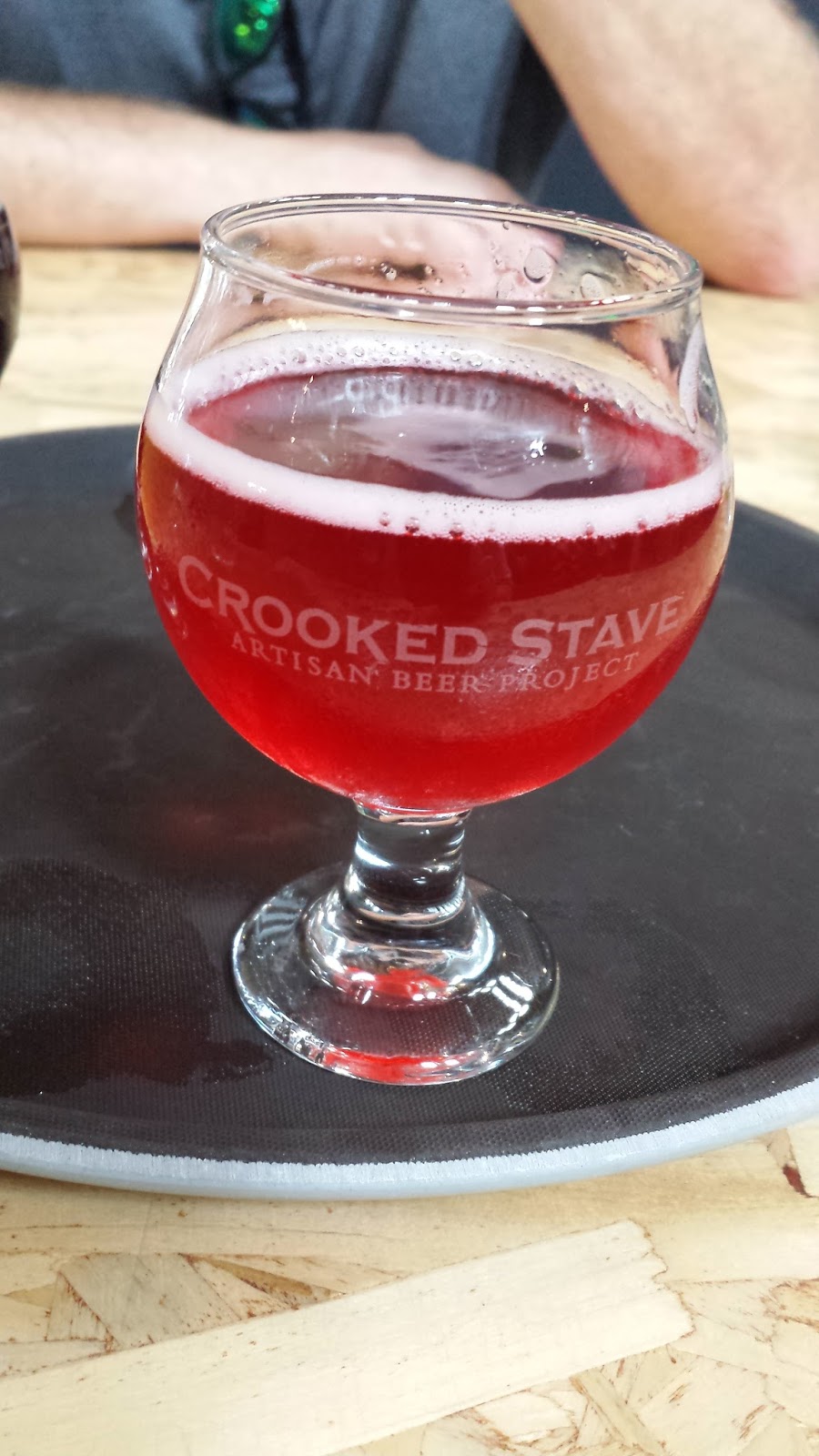 While Crooked Stave is known rightly for its astringent, taste-bud-pushing creations, it may have found its greatest success yet by stepping just slightly off the pedal and letting the fruit and wild yeast mingle in a pleasing, almost soft way here. Eye-poppingly pink in its pour, this is both sweet and tart, both bullish on its wild side and more concerned with its fruit than its acid. It simply is delicious.
2) Spangalang Anniversary Ale
To celebrate its first birthday, this rising Denver star blended several of its hop-forward beers, combining barrel-aged and fresh IPAs in one big, never-again-reproducible batch. In doing so, it produced the most interesting one-off beer made in this state in years, a taste-bud-wowing experiment that was simultaneously hoppy and woody, earthy and pleasingly bitter. Before it turns two, Spangalang already is making some of the best beer in Colorado; this was evidence of just how much better it can be.
1) Great Divide Barrel-Aged Hercules
Ever since my book "Mountain Brew" came out in 2011, I've been asked what is my favorite brewery in Colorado. I usually duck the question but, when cornered, have tended to identify Great Divide as the single best in this state. By the end of 2015, though, I was starting to question that long-held assumption, wondering if the long-time experimental brewery was starting to lose ground to others that were innovating more. Then, everything changed this year.
 Great Divide's barrel-aging program, which has been in place for years but got a major boost with the 2015 opening of its Barrel Bar on Brighton Boulevard, elevates this brewery into a class of its own for several reasons. First, it allows it to rediscover and reinvent already top-tier offerings and bring out new flavors in them, from its Old Ruffian barleywine to the aforementioned black lager. But second, it does so without simply dropping beers into wild-yeast-ridden barrels and turning everything sour. Its usage of oak and whiskey barrels that deepen the flavor and body of the beers gives it a real personality in an atmosphere when even great breweries begin to seem a little bit like each other in their experiments.
Putting its Hercules Double IPA into whiskey barrels for two years before unleashing this beast at its 22nd anniversary party this summer was the best beer idea of the year. The hops retained an amazingly out-front presence despite their age, and the whiskey took on just a supporting role, as wood and vanilla notes blended seamlessly with Cascade and Simcoe hops. Like much of the best of 2016, this didn't break new ground in flavor profiles. It just brought a classic recipe to bear in a new and better way that will set the mark for this brewery and all others going forward.
Labels: 4 Noses Brewing, AC Golden, Beryl's Beer, Comrade Brewing, Crooked Stave, Great Divide, Spangalang Brewery, Top Beers of Year, Trinity Brewing, Weldwerks Brewing
Friday, November 25, 2016
A Plum Good Idea

Brewers can take the same fruit and do wildly different things with it. In different hands, for example, a strawberry can be be a perfect sweet complement to the tartness of a Berliner Weisse or the added lightener to a blonde ale that makes it saccharine and undrinkable. So, it's pretty difficult to paint a fruit with one description in regard to its presence in beer.
That said, a handful of breweries are proving in recent months that plum not only can be a special addition to zip up the flavor of an already strong base beer but that it might be one of the best additions discovered in a while in order to give a bullish, daring jolt to tart beers.
Maybe the most proving example of this theorem is Trent's Plums, which truly has become the stand-out offering of Beryl's Beer, the too-often-overlooked barrel-aging specialists in Denver's RiNo neighborhood. This is a beer that walks the delicate line between taste-bud-waking tartness and over-acidity. But somehow, it's the presence of the fruity, juicy plums, when added to this sour brown aged for two years in red-wine barrels, that cut back on the tinge just enough for you to be both shocked and pleased. And it's a beer (tucked somewhere in the three tasters pictured above) that will make you go out of your way to stop at the brewery and try it again.
 AC Golden put forth a slightly more puckery, but ultimately very successful, barrel-aged effort this fall known simply as Colorado Native Plum. Though just 6.5 percent ABV, it's a big ol' mouthful of tart - astringent with just a hint of sweetness that is all natural and shows no hints of the granulated sugar that can mark other, lesser fruit sour efforts. It's a challenge whose aftertaste sticks around for quite a while, but it too is balanced just enough by the dark-fruit addition to this aggressive beer.
Those who attended the Great American Beer Festival this year may have been lucky enough to sample a wider range of plum beers - or they may well not have been. Plum lambic offerings from the likes of Reno's Brasserie Saint James and Arvada's Yak and Yeti generated big lines - and then ran out quickly.
Is plum the next hot ingredient? The tart beers employing the fruit certainly have a limited audience. But it's a group of drinkers likely to recognize the enormous taste in the previously untapped fruit and seek out other brewers who are willing to try their own versions.

Brewers can take the same fruit and do wildly different things with it. In different hands, for example, a strawberry can be be a perfect sweet complement to the tartness of a Berliner Weisse or the added lightener to a blonde ale that makes it saccharine and undrinkable. So, it's pretty difficult to paint a fruit with one description in regard to its presence in beer.
That said, a handful of breweries are proving in recent months that plum not only can be a special addition to zip up the flavor of an already strong base beer but that it might be one of the best additions discovered in a while in order to give a bullish, daring jolt to tart beers.
Maybe the most proving example of this theorem is Trent's Plums, which truly has become the stand-out offering of Beryl's Beer, the too-often-overlooked barrel-aging specialists in Denver's RiNo neighborhood. This is a beer that walks the delicate line between taste-bud-waking tartness and over-acidity. But somehow, it's the presence of the fruity, juicy plums, when added to this sour brown aged for two years in red-wine barrels, that cut back on the tinge just enough for you to be both shocked and pleased. And it's a beer (tucked somewhere in the three tasters pictured above) that will make you go out of your way to stop at the brewery and try it again.
 AC Golden put forth a slightly more puckery, but ultimately very successful, barrel-aged effort this fall known simply as Colorado Native Plum. Though just 6.5 percent ABV, it's a big ol' mouthful of tart - astringent with just a hint of sweetness that is all natural and shows no hints of the granulated sugar that can mark other, lesser fruit sour efforts. It's a challenge whose aftertaste sticks around for quite a while, but it too is balanced just enough by the dark-fruit addition to this aggressive beer.
 Those who attended the Great American Beer Festival this year may have been lucky enough to sample a wider range of plum beers - or they may well not have been. Plum lambic offerings from the likes of Reno's Brasserie Saint James and Arvada's Yak and Yeti generated big lines - and then ran out quickly.
Is plum the next hot ingredient? The tart beers employing the fruit certainly have a limited audience. But it's a group of drinkers likely to recognize the enormous taste in the previously untapped fruit and seek out other brewers who are willing to try their own versions.
Labels: AC Golden, Beryl's Beer, Brasserie Saint James, Fruit beers, Plum beers, Yak and Yeti

