Thursday, September 19, 2019
One Year In, Brooklyn Brewery's Arrival to Colorado Remains Worth Celebrating
 Between the rate at which out-of-state breweries enter Colorado and the rate at which new breweries open within the Centennial State, there is little reason to acknowledge a beer maker from the other 49, regardless to celebrate it. Brooklyn Brewery, however, is the exception to that corollary.
Nearly one year after the 35-year-old brewery first began to offer its wares at local bars and liquor stores, there is something that distinguishes it from the other breweries that have crept into our hotbed of a beer market, even as fantastic as some of those breweries (i.e. Bell's) are. And that something is a sense of craft-beer history that continues to waft out of each of its cans and bottles, almost like it would be far more unnatural if Brooklyn's beers were not with us than the fact that a New York-brewed offering is sitting on our shelves beside 90 different Colorado creations.
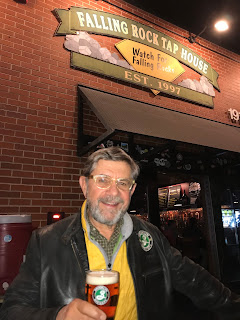
Brooklyn founder Steve Hindy (pictured above), after all, is a true pioneer of the American scene. A former Middle East correspondent for the Associated Press who discovered homebrewing through envoys that made their own libations in countries where it was illegal to buy them, he started a "microbrewery" at the time when the idea was foreign to American drinkers. He made fans not only in New York but among pilots and oil tycoons from Europe and Asia who insisted he start exporting the beer by 1988. And yet it was only 30 years later that he felt the time was right to distribute in Colorado.
 "You do have quite a few breweries here. I think the craft beer movement is largely about local," Hindy told me over a couple of pints last October at Falling Rock Tap House. "But the beer industry is about brands. And brands can transcend local."
One sip of the brewery's Sorachi Ace, a saison with a slightly lemony aroma and bigger-than-it-seems wallop of alcohol in the body, will tell you that. Colorado has some great saison makers — including Funkwerks, the Fort Collins brewery in which Brooklyn bought a minority stake in order to distribute throughout the country — but Sorachi Ace still stands out as one of the cleanest and yet most unique saisons out there.
Or there is its Bel Air Sour, a lighter-bodied Lactobacillus-tinged wild ale that gives off a pre-ripe fruit feel at first blush but settles to a level of tartness that licks the taste buds without burning them up. It's become my go-to beer to introduce to friends who are sour-curious but still not sure how much they want to try the style.
Brooklyn's entry also brought 21st Amendment Brewery into the market, as it has a similar financial relationship to that San Francisco denizen as it has to Funkwerks. And 21st Amendment has brought the state the unique Hell or High Watermelon Wheat and the excellent Brew Free or Die Blood Orange IPA, two beers that also transcend local and make you want to crave a classic.

There is, of course, the Brooklyn Lager, a finely made remnant of 1990s beer culture that reminds you of why people wanted to switch from flavorless light lagers to American takes on the style that imbued a shocking amount of flavor at that time. The beer (thanks, Dustin Hall, for the photo) still represents 50% of Brooklyn's production, and it's the one Hindy will drink all night as he explains how it just seemed the time last year to make Colorado the 30th state in which the brewery is sold.

So, come Great American Beer Festival, I will seek out the new and bold and hip and daring, because that excitement of boundary-pushing continues to define why craft beer is so fresh even after it's become a market go-to for 10 years. But I also will seek out the Brooklyn booth, despite it being embedded in Colorado at this point, because seeking the future without knowing the delicious past of this sector creates a lack of direction, long after Hindy, brewer Garrett Oliver and others pointed the industry to the place where it now sits.
Labels: 21st Amendment Brewing, Bell's Brewing, Brooklyn Brewery, Funkwerks, Great American Beer Festival, lager, Saisons, sour ale


